Other than having similar origins in printing terminology, both stereotype and cliché are potentially dangerous offshoots of trying to immerse yourself in a new culture, as sometimes it’s easier to make simplified generalizations to explain cultural differences, rather than trying to understand where those differences come from—and let’s face it: racial stereotypes are so cliché these days.
Stepping into the Western Style bathroom on any Indian Railways train, then, it’s refreshing to see that some stereotypes extend beyond borders. What kind of stereotypes would those be, you ask? Well I’m talking—of course—about gender stereotypes.
Fig 40-2: Rules For Best Practice
While I’m not one who likes to encourage the accepted clichés about toilet seat positioning, you have to admit that it’s a damning piece of evidence in the ongoing debate when world’s single largest employer—1,583,614 people, in addition to transporting 4.2 billion people annually—finds it necessary to stencil gender-specific instructions for toilet use (see Fig. 40-1) on the bathroom wall.
For those of you looking for any further instruction on toilet-use conduct, simply refer to Fig. 40-2. These guidelines, as far as I can tell, are applicable to both sexes.
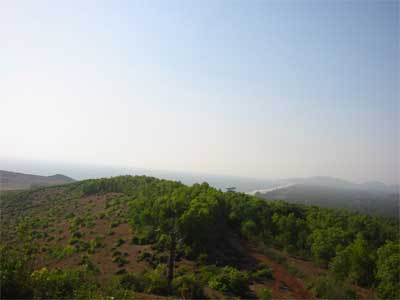
Fig. 39-1: Overview of the Uncontrolled Research Environment
You know that calm, relaxed, and contented look that people have after spending extended amounts of time on the beach? After a recent five day stretch of hands-on research conducted between Om Beach, Half Moon Bay, and Paradise Beach on the shores of the Arabian Sea just outside of Gokarna, I’m beginning to think that these hallmarks of well-tanned people are simply a combination of sunstroke, complete physical inactivity, and a near-complete lack of mental stimulation.
As the saying goes: "Those who can, do."
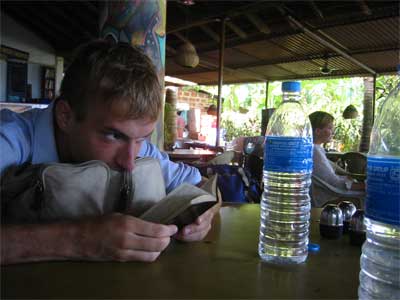
Fig. 39-2: A tan Louis-Philippe suspiciously looks away from a book for fear that stimulating information might harsh his vibe. He instead concentrates on a bottle of water, which promises to provoke no thought.
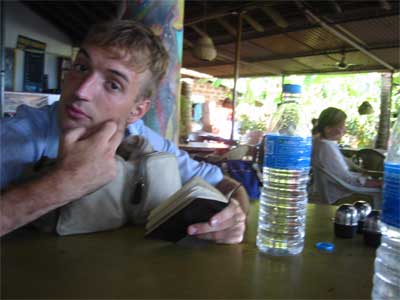
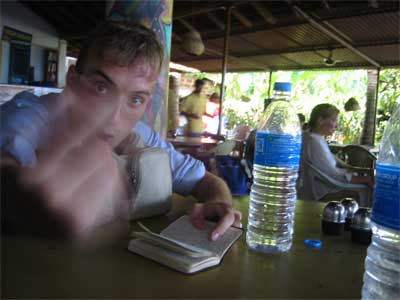
Fig. 39-3,4,5: Louis flips me off for using the above caption (click bottom photos for detail)
Fig. 38-1,2,3: Bhairon Villas Guesthouse (click bottom photos for detail)
FOR THIS:
Fig. 38-4,5,6: Hotel Meghsar Castle (click bottom photos for detail)
ON ACCOUNT OF THIS:
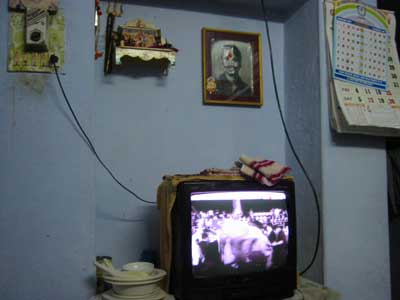
Fig. 38-7: We Heart Television
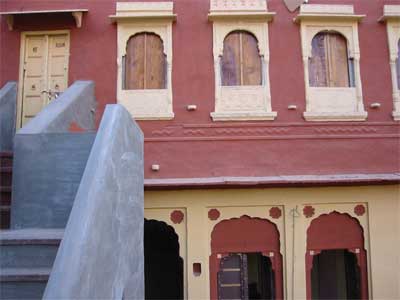
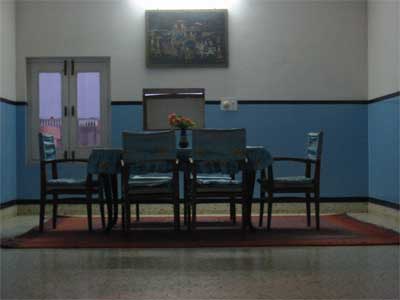
When trying to explain to the manager of the first guesthouse why we were leaving his somewhat expensive (though thoroughly television-less) property (See Figs. 38-1,2,3), the only justification that I could offer was that we were really tired, and we just wanted to be entertained.
We had chosen the original guesthouse—formerly the residence of the Maharajah of Bikaner and his four wives—due to it’s central location, the promise of ease and comfort, and the assurance of both air conditioning and cable television, after a long couple of days spent on camels in the desert. The truth is that all we really wanted was a television, and that’s exactly what we got by relocating to the second, more run-of-the-mill guesthouse, on a noisy street north of town (See Figs. 36-4,5,6).
In the end, all we had to do was forfeit the more conventional beauty of the first location, for a situation where the beauty was a little more subtle—by which, I mean, the availability of HBO.
Sometimes sacrifices simply have to be made for comfort, though that doesn’t mean that I felt any bit less ridiculous when trying to find the words to explain this to the manager of the first place.
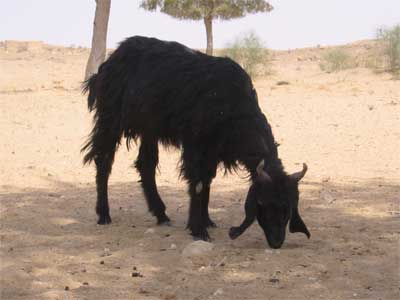
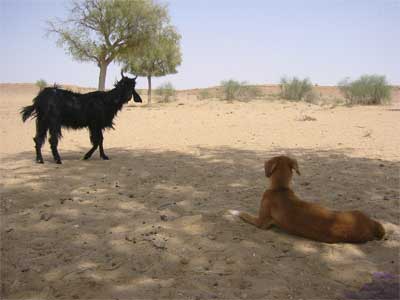
Fig. 37-1: Visualize a Parkscape (Either Ignore the Goat or Pretend that it's a Dog)
Repeat a familiar word for a few minutes and it will lose definition, stare at anything totally familiar to you for long enough and it will eventually lose its context, but oddly, if you stare at the most unfamiliar of terrain, it will eventually become familiar.
Sitting out the hottest hours of the afternoon beneath a shady tree in the desert while on a camel trek (about 40 miles to the east of Pakistan), the landscape began to look like a sprawling parkscape that you might find in a major western city, with hills that lead towards the horizon, and trees and shrubs spaced at appropriate intervals—the only thing that you have to neglect is that it is unbearably hot and the grass has been replaced by sand, though that ceases to be apparent after an hour or two.
Fig. 37-2: Your Pretending Produced an Actual Dog. Your Parents Were Right—You Clearly Have a Good Imagination.
Short of being worshiped, as is their reputation, cows are more or less just left to their own devices—which is to say that they walk around, eat plastic bags and food scraps alike, sip at puddles, and generally go where they please and do as they like, within the bounds of society continuing to function in their presence. When they’re not sticking their noses in things, cows just tend to stand around, and in the process of doing so, manage—at least partially—to block the flow of both human and vehicle traffic.
While a cow in the road seems generally aggravating to drivers, the relationship is pretty much one of mutual indifference, as the organic nature of traffic simply assimilates the cow as yet another thing to navigate around, and the car’s large and threatening nature seems to be a sufficient deterrent to any act of frustration on the part of the cow.
Pedestrians, however, don’t have it quite as easy—while humans are clearly smarter than cows when it comes to the use of common walkways, there is a serious deficit in the human-to-cow size differential, and the placement of a large-enough cow in a small-enough old city street is enough to completely hold up traffic, not to mention that on occasion, cows will charge at people as they pass. The fact that cows occasionally attack shouldn’t be blown out of proportion, however, as it’s far more common for people to hit cows than the other way around, and cows don’t tend to budge until a hand (at the very least) is raised.
Also, to do justice to the cow in this scenario, it is far more often that people jump skittishly out of a cow’s path than a cow will actually show any sort of aggression, though the implication in the public’s reaction to passing cows is that there is a very rational justification for this fear.
After watching this pageant play out over and over again, however, I got a firsthand lesson in what the hesitation was all about one hot afternoon in Udaipur, when I just barely managed to avoid the business end of a cow’s horns, as it saw fit to come charging after me for no discernable reason. This attempted charge was startling, and certainly vindicated the caution that I felt when passing random cows, but it was nowhere near as disarming as in Jaisalmer, when I absentmindedly turned from a sign that I was attempting to read, to run head-on into a cow that was just standing in the middle of the narrow street, attempting to mind its own business.
At first, I felt a little weird for having so blatantly hit one of these supposedly sacred animals, and perhaps even a little guilty after I had spent so much time questioning the intention of every passing cow, though I’ve since decided that it was simply my way of evening the score, despite the fact that this conclusion simply means that it’s now my turn to watch out for what the cows might do next.
Fig. 35-2: Cow on Cow Violence is the Saddest Kind of Violence
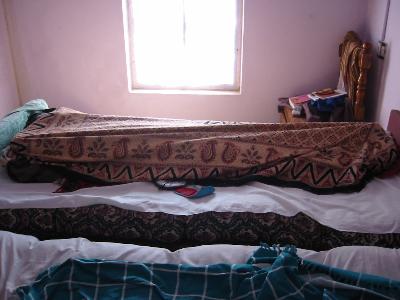
Fig. 34-1: Indian Railways: Good for Traveling—Bad for Sleeping
Though waking up early is rarely easy, there’s a certain comfort in getting out of bed to do something early in the morning, if you know full well that you’ll be able to return to bed at some point in the morning in order to resume sleeping.
Tasks that require this sort of half-hearted investment in being awake include—though are by no means limited to—taking someone to the airport to catch an early flight, waking up to let a pet out, or on some mornings, it might just be an important feature of a classic false start to the day. Traveling, however, requires the addition of certain things to the above list, such as waking up early to catch the afore mentioned flights, sleeping in thoroughly unfamiliar beds, and arriving in totally new towns at the crack of dawn by way of overnight train.
While the overnight train’s ability to conserve valuable travel resources—such as precious daylight hours and the cost of a night's lodging—is by far one of the most brilliant components of traveling in India, arrival times vary greatly, and train sleep is generally a rigorous undertaking. Waking in the predawn hours of the morning, then, only to be faced with the task of dealing with the cadre of overanxious hotel touts and pushy rickshaw drivers that lie just beyond the train door while still suffering the effects of a difficult night’s sleep, provides one of the singularly most daunting challenges of constant relocation.
No matter what the reason, when you wake up too early in your own bed, there is comfort in the fact that, although you must separate yourself from its familiarity, it’s always the same bed that you’ll be returning to whenever you accomplish whatever it was that you woke up to do. For all benefits of travel, the excitement of constant movement means that no matter how much one guesthouse might resemble the next, it’s never the same bed that you’re returning to when you do eventually arrive at your destination and get to go back to bed.
Fig. 34-2: You Can Never Sleep in the Same Bed Twice -----
CONFIDENTIAL TO JECCA: I would like to apologize for using the picture in Fig. 34-2. The only justification that I can offer is that it's the only picture that I have of anyone sleeping. I would like to apologize for using the picture in Fig. 34-1. The only justification that I can offer is that it's the only picture that I have of anyone sleeping. Anyway, how is anyone going to know that it's actually you underneath that blanket?
Fig. 33-1: One Half of a Hopelessly Flawed Metaphor
Last week in Bombay, as I walked along a very nice part of town, just behind the famous Taj Mahal Hotel, though closer to where I was staying—the less renown, though just as well known—Salvation Army guest house, I saw a sparrow chasing a cockroach across the sidewalk the same way that an overexcited dog would chase a squirrel through a park. Though the action was more frenzied than your standard animal-chasing-animal routine—cockroaches don't so much scurry when moving across uneven marble as they wobble, and far from providing a smooth chase, sparrows are given to hopping instead of running—it was still worth stopping a moment to watch the drama play out.
It is both accepted and expected that dogs chase cats and cats chase mice, while birds are supposed to poke around in the grass, and wait for cats to pounce on them, so that they can effortlessly fly to the branches of some nearby tree. These relationships are all based on the idea of the chase, though they're ultimately centered on the all-important act of not getting caught.
In fact, these chases are so storied that they're clearly clichés at this point—and for good reason: it seems to be human nature to identify with the idea of things being just beyond our reach. Like the cat that goes sliding into the wall as the mouse stealthily slips into its hole, people seem to take comfort in the fact that whatever it is that they pursue is just beyond their reach—especially when they find themselves crashing into the wall as the chase comes to a conclusive end. The entire metaphor has a tendency to supply meaning to failure, and who doesn't like a little meaning in their failure?
Perhaps accounting for why this mini-drama involving the sparrow and the cockroach made me laugh so hard, or maybe just giving justification to why that this sort of chase will likely not go down in the annals of hallowed metaphor, is the fact that when this chase was over, the sparrow actually flew away with the cockroach clenched firmly in its beak.
Then again, perhaps it has something to do with the fact that sparrows are not that cute, and cockroaches are downright disgusting.
I didn't want to let this picture go to waste, and since it has outlasted its use as a placeholder in the previous post, I'm giving it's own post, though it's really nothing more than a picture post of Taj Mahal employees having a friendly lunchtime wrestle in the shadows of the world's greatest monument to love.
Just for the record: the guy on top in this picture (in white) dominated this matchup, though I had my money on the other guy.
Fig. 31-1: Meditation for Idiots (The dot is in the lower left corner)
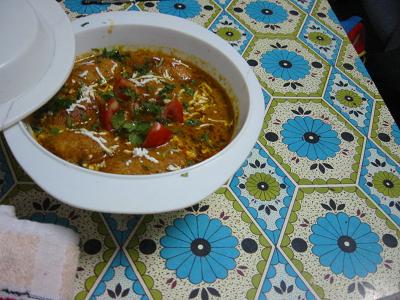
Team India took cooking lessons last week in Udaipur, and while we all now know how to make masala chai, a nice chutney, samosas, palak pakora, malai kofta (see Fig. 31-2), dal fry, chapatti, and parathas, the real fun in the exercise came in the form of taking notes on the sage advice that our instructor dispensed as he taught us these delicious recipes in his kitchen. The notes, transcribed, are as follows:
1. Spend 10 minutes a day, just sitting, staring at a spot on the wall (see Fig. 31-1) and praying to your god, and you will always look good/young, and never have to go to a doctor. 2.Spinach is good for you—so good, in fact, that if you eat it, you will never have to go to the doctor. 3. Squeezing one lemon and massaging it into your scalp will, in one week’s time, completely cure you of dandruff, thus eliminating any need to seek advice from a doctor. 4.Freckles are a medical problem; rather than consulting a physician, this condition can be solved by drinking anis seeds seeped in hot water before going to bed. 5. Though not pertaining directly to medical conditions, the following rhyme should nonetheless be minded: No College—No Knowledge, No Wife—No Life.
If I were going to pick a theme for these embedded lessons, it would have to something along the lines of How to Never Go to the Doctor, though if you asked a doctor what the theme was, he’d probably say that it was simply a recipe for Iatrophobia1.
Fig. 31-2: Mmm, Malai Kofta
-----
1. Iatrophobia: An abnormal and persistent fear of going to the doctor or of doctors.
Fig. 30-1: The Famous Shot of the Famous Taj Mahal
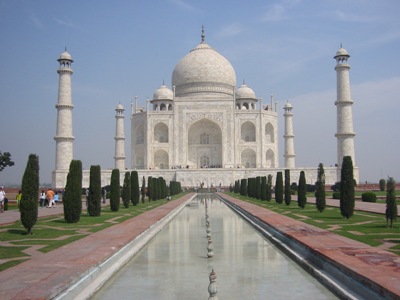
We did our duty as tourists in this country, and it was thus that we found ourselves in Agra a couple of weeks ago, and while the Taj Mahal truly is beautiful (see Fig. 30-1), the constant flow of tourists seem to have spawned a strain of shop owners and rickshaw drivers that are thoroughly resistant to standard methods of refusal to their constant offers of good bargains that you are clearly not interested in.
In response to this stepping-up of their game, I determined that the internationally standard No refusal had been rendered useless, so in place of it, I started to reply with Yes to every single thing offered, as I continued walking straight ahead as if I had said No.
At first, nobody figured out how to respond to this new technique, though after doing this sucessfully for an entire day, some little kid delivered a bit of karma (in the form of a small rock) into my back as I walked away from him, after enthusiastically telling him that I wanted to look his selection of postcards, never once looking at him or breaking my stride as I walked past.
The thing is, I couldn't really get mad at him because that's exactly what my response to me would be if I were in his shoes. I just laughed and kept on walking, assuredly saying Yes to everything that everyone offered me the rest of the way back to our guesthouse.
Fig. 30-2: The North Indian Shopkeeper in His Natural Habitat
Facts For the Traveller: Properly boiled liquids are not as likely to get you sick, and thus preferable to lukewarm or cold liquids, but when a pot of chai is visibly steaming in the searing hot midmorning Rajasthan sun, it is also likely to burn your tongue.
This might seem obvious, but somehow it's a lesson that must be learned over and over again.
I don’t know if I should be proud or ashamed, but let’s just say that if I were a bunch of doctors, it might have been said that ‘a bunch of doctors thought that it was impossible for me to grow a moustache’, so I’m actually sort of attached to the thing.
All this means, really, is that I spend a fair amount of time trying to decide what the best angle is for it to follow down from the cleft in my lip and what the proper distance should be between the bottom edge and the top of my lip. Though it is at all times a work in progress, the current state of assessment and reassessment has resulted in a thin—perhaps even tapering—affair, as if a caricature of something French, though it is either too thin, or to lightly colored, to look very dramatic or pointy.
Add to this my new rash of aggressive haircuts, and you have the reason why I'm not actively exposing anything too far above the ear in pictures.
At this point, I think that it’s necessary to point out that this is actually the sort of look that I was going for when I set out growing this moustache nearly two months ago. When Jecca and I were trying to give a name to this style while it was still in the stages of infancy back in Calcutta, she diagnosed it as a School Pictures look. At that time, though, the moustache was more wispy, and the look largely consisted of a children’s sweater vest featuring a fluffy gray dog leaning on a pink book worn over every shirt that I own, in addition to a denim hat with a too-short brim, which for some reason, had a label sewn onto it that read Reebok-INDIA-Nike, and I thought was hilarious.
In some ways, the current state of things might actually be considered a success: while it's now too hot to wear sweater vests, and the hat looks a little too Village People with a full moustache, it is true that I currently look a lot like I walked right out of my 9th Grade school picture.
Mostly, I suppose that I'm doing this because I can, as it ultimately really doesn't make much of a difference what I look like while travelling here—everyone is going to stare, one way or another. The philosophy behind the School Pictures look has more to do with trying to make people laugh whilst they stare, as long as they’re bothering to stare—a sort of ‘See, I'm in on the joke, too’ approach to things.
Yesterday, on the bus, someone told Louis that I looked like Leonardo Dicaprio, and though I know that this isn’t really true, it sort of makes it harder to shave it off—keeping in mind that I usually only garner comparisons to Robin Williams—though if I don't cut it now, I'm going to come home with a funniest tan line that anyone has ever seen.
Introducing Louis-Philippe: We first saw him in Darjeeling, we met him on a trek to Tsongu Lake in Gangtok (Sikkim), and we've all been traveling together since the train to Varanasi.
At first we were pretty sure that he was French—though we were wrong—and in the time since we met him, he has proven that the Quebecois are truly the Al Newman of the international travel scene: this kid can spit filthy lines in German, chat coyly in Korean, and speaks English just as naturally as he speaks French. On top of all this: he's funny and he cuts our hair—of which mine is currently in a funny state, but that's a story/picture for another day.
It's been nearly a month now, and we're pretty sure this one's a keeper.
To anybody who's keeping track: please say hello to Louis-Philippe.
Fig. 27-2: Jecca and Louis Humor Me by Pretending to Enjoy a Pretend Dog Fight in Varanasai
Fig. 26-1: The Loneliness of the Long Distance Cycle Rickshaw Driver
Sometime around senior year of college, there was a period of time when I felt like I was getting away with too much in my day-to-day life, so perhaps as an answer to this, when I would go to bed at night, I would have these really involved dreams where people would tell me off severely. Though everything about these dreams seemed bad while I was dreaming them, they had the odd benefit of making me feel better when I woke up in the morning, as if a tension had finally been alleviated between what I was dishing out, and what I deserved to get back.
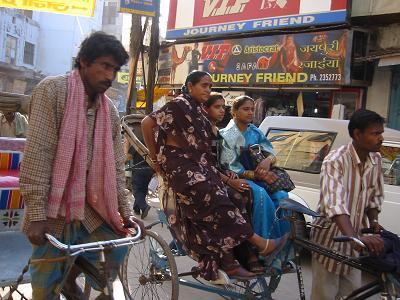
Anyone who is feeling a similar sort of tension in their day-to-day life, and needs to feel some sort of guilt in order to feel better, can achieve this same effect—though this one will cost you about the U.S. equivalent of about fifty little cents (and one international plane ticket, naturally): try taking the human-powered cycle rickshaw between Siliguri Junction and New Jalpaguri Station with your gigantic backpack, and sit helplessly as you watch the man operating the rickshaw pedal himself to a point somewhere near collapse, as he struggles to get you the 5km between the two stations in order to receive the 20 Rupees that you bargained him down to.
As I am not feeling the need for any more guilt than I already feel as a traveler, upon arrival at my destination my completely mortified conscience got the better of my thrifty side, and I tipped him twice the agreed amount.
Yesterday was a Hindu holiday called Holi, in which the arrival of Spring is welcomed by throwing bright powdered pigments at anybody that you pass on the street, though being a tourist, you tend to get the worst of it.
You know that spring must be coming when, in addition to popping up in the headlines and satire of those headlines that make use of childhood toys, baseball starts creeping into you tourism experience in India.
Exhibit A would have to be the three ring circus that the Major League Baseball steroid hearings have become, Exhibit B would be this recreation of the festivities in New York using Lego figures (courtesy of Bat Girl, viaKyle and Anna's watchful eyes and dilligent use of the Friendster Bulletin Board feature), while Exhibit C is the above photo (see Fig. 23-1), taken in the building just to the east of the Taj Mahal.
Am I simply suffering from Spring Training fever, or do the two pieces of marble laid out give the impression of that they might be, say, side-by-side home plates, as can be seen in bullpens throughout ballparks everywhere? Although I’m sure that these were laid out as a part of a restoration project more so than as a place to warm up pitchers, the coincidence in appearance is undeniable, and was only made more mysterious by the fact that there were no corresponding home base shaped gaps in the surrounding stonework.
The Taj Mahal itself is supposed to represent the link between the earthly world and the paradise of the afterworld, though at the moment that I happened upon these two slabs of marble, it all seemed to be lending itself too easily to that cliché of “Is this Heaven? No, it’s Iowa,” made popular by Kevin Costner’s last watch-able movie (that I can recall, anyway)—except that this Field of Dreams is much farther away from home than The Hawkeye State.
Fig. 23-2: In the Field, Gathering Information with a Rake? Photo and Photoshop-ing courtesy of B. Alec
And while I'm on the topic of Spring Training, keep an eye on the Sunday Baseball website for taunts and updates on the coming season. Who knows? I might just be there for Opening Day—provided the snow lasts until June.
Everybody knows that fast food tastes good—even if it is only true for that brief period before the grease makes for a feeling in your stomach that approximates regret. This lesson, however, must be learned again and again, if the visits to McDonalds or any of its compatriots are far enough apart.
Last week in Delhi, I learned this lesson yet again for the first time, and although a Chicken Maharaja Mac is by no means a Big Mac, after not seeing a McDonalds for over two and a half months, it tasted just fine to me—even if the gratification it only lasted until that feeling of regret started to settle in.
Confidential to Ronald McDonald: See you when I get to Bombay.
Part of the fun of going to any given place in India that large groups of people go to is fending off the armies of children that are dispersed throughout the crowd in order to sell you things. These children offer products ranging from postcards to hot glasses of chai, while still others wander the crowd searching for handouts of coins or writing utensils (school pens!). Kids often seem to be the chosen method for marketing these products, most likely on account of their undeniable cuteness and the low-to-nonexistent cost of their labor, and although the work seems to make these kids pretty cynical, in the end, they are just children, and this has the charming side effect of a sort of playfulness in the tired old sales transaction.
None of this changes the fact that I usually won’t buy anything from people who employ almost expressly annoying marketing techniques (such as begging and pleading), although certain kids make these interactions funny, at the least, when they become exasperated, and the sale is slipping away from them.
One of our funniest dealings with the child aged sales force came a few months ago in Goa (see No 06. The New Slang), when a kid sitting in a shop stall blurted “I am Full Power!” out at me as I passed by him yet another time without buying anything. At the time, I had no idea where such an ingenious phrase could have come from, though last week, as we sat watching the nightly puja on the banks of the Ganges in Varanasai, one of the little salesmen (who was trying to sell us votive candles to float in the river) got frustrated and inadvertently completed the mysterious phrase when out of desperation, he muttered “Full Power, twenty-four hours, no toilet, no shower.”
Fig 21-2: One Person's Puja is Another Person's Marketing Opportunity
It’s nice to think that these children might all have a common language when it comes to expressing their frustration with the stinginess of the tourist population, although I’m sure that this saying is born out of a tourism-industry-wide sentiment rather than some sort of 12 and under collective consciousness. Ultimately, I think that this particular kid thought that he was saying something rude to us, though if his aim was to offend, then he picked the wrong group of tourists: all we did was start laughing and beg him repeat himself, to which he obliged us--although unlike the puja happening behind him, watching this actually cost a few Rupees.
Old Cities are usually called Old Cities because they've been around a while, and most of the time, they're quite cramped because they were built before a time when cars needed pass down their narrow streets. Varanasai's Old City is no exception to this model, and while it makes for very atmospheric and charming (if not claustrophobic) surroundings, it also means that there aren't many places to go when you need to jump out of the way of the people, bicycles, motorcycles, carts, cows and dogs that people the neighborhood's five-foot-wide streets.
The walking here is precarious, when trying to dodge stubborn cows, pedestrians, motorcycles, and mopeds while at the same time trying not to fall into either a tourist-trap silk shop or (much worse) one of the many piles left in the middle of the road by any given cow that happens to be wandering around. After spending a couple of good long days navigating this maze of crowded and cow-pie covered streets, an out-of-season rain storm chased us indoors and onto the rooftop restaurant of our guesthouse to watch as the storm front rolled in (see Figs. 20-1, 2).
The level of delight that registered with most of the tourists that had gathered to watch the storm's arrival was probably two-fold, as the appearance of the storm was sudden and stunning, while at the same time it seemed to promise to bathe the streets of the filth that we all spending so much energy trying not to accidentally step in. However, when I emerged from our guesthouse the next morning, I learned that things don't always work here as they work in clichés that involve rain washing all the scum off the streets, and the downpour had not cleaned the streets at all. On the contrary, it simply dispersed what had previously lay in inert clumps, and made for a thin layer filth that there was no way of avoiding by way of careful stepping.
Gross? Absolutely—though add this into the equation: all that any of us have for footwear these days is sandals. Ick. Let's just say that we're not afraid of shit, although I can tell you that there was much foot washing when we got back from a long day of walking around.
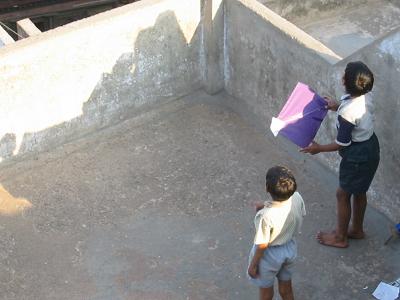
One afternoon in Varanasai, through the haze of allergy medication, I tried my hand at the popular Indian sport of Kite Flying, though I quickly found that I lack any sort of natural talent for this variation on, what for me, was a childhood hobby. The Old City here is so cramped, that all recreation within its boundaries is limited to that which can be undertaken on its rooftops. It's in this environment that, for a very long time now, people of all ages have been taking to the air with kites whose lines are dipped in a mixture of crushed light bulbs and glue, and try to assert air dominance in their particular part of the elevated neighborhood by cutting down any nearby kites with this sharpened string. The effect of having all of these kites whipping around the sky is a little bit ridiculous at first, but the competition is nothing short of dead serious.
Kites here are smaller and simpler in appearance than those of my youth, though they proved much harder to get airborne than the ones that we used to buy as kids at the gas station, as there are no running starts on rooftops, so air resistance has to be achieved through a rapid succession of jerks on the line, alternately pulling the line in, and letting it out with a judiciousness that I simply couldn’t comprehend.
On top of this, the market-bought kite of a western tourist would be a hotly sought-after prize, and a few kids on nearby rooftops told me as much when they tried to get me to just give them the kite instead of having to wait for me figure out how to get the thing in the air before they cut me down.
Suffice to say, I did neither: by the time I was done trying to accomplish the first of these two tasks, my kite was trashed to the point where it was no longer airworthy, let alone trophy material.
40. Potty Training
Dude have you started a new blog?
Posted byMike
39. Rest and Relaxation
This blog fascinates me, and yet I have no idea who you people are or what you're doing. I don't know what that means.
Posted byBrooke
Brooke is all about it! Yes. Hey, Nick, it's time to come home and figure your shit out. We need to talk.
Posted byArron
My sorry-for-taking-so-long responses to the above comments, in order, would have to be: "Hello," "Okay," and "I'll see you in the cheap seats." The order here is only important because, while the first and second responses are more or less interchangeable, responding to the first comment with the third reply would just come off as weird .
So, to elaborate: B.Alec , while I don't know what of my shit so urgently needs figuring out, I have been looking for someone to figure my shit out for me for years, so if you're offering, then I'm taking you up on it. Perhaps we can talk about it over a Twins-Brewers game in Milwaukee? And ARRON, even if I wasn't already planning to be home by then—which, as it happens, I am—I would come home specially for a trip to Wisconsin like that. Likewise, Brooke: thanks for finding this blog, and if you're not up to anything on June 25th, perhaps it could be the perfect time to put all of the pieces together, while at the same time partaking of beer, hotdogs, and the Great American Pastime—drinking beer in Wisconsin, that is.
Hey, check it out—I did end up using the third reply to respond to the first comment! He Gu myself? He Gu someone, anyway.
Posted byNICK
No shit guys: I was planning on getting a bunch of people together for that game to celebrate my 26th. Shall we merge plans?
Posted bypete
Oh, yes we shall. We will own the cheap seats.
Posted byNICK
38. On How We Are Brats:
37. Seeing the Desert for the Sand
36. File Under: Additional Skills
Hi Nick!
This is an odd thing to do 'cos u have probablu no clue who I am... Remember being in Rome in 2000? Well, I was there together with my classmates and I think u know who Marthina is...?! Anyway, if u remember a friend of hers called Therese (who was actually in your room at the hotel), that would be me.
I was talking to Marthina on the MSN and she told me u had this website so...I thought I'd surprise you!
Anyway, hope you're doing well. Good luck with driving the camel!
Therese x
Posted byTherese (from Sweden)
I can't tell you how many conversations I have that start "Remember being in Rome in 2000?"
Hey, wait, I was in Rome in 2000!!!
Whoa.
Posted byArron
35. Cute, Bored, and Dangerous
34. Waking Up Just to Go Back to Bed
33. The Art of the Chase
Do you think you should add Indian tout chasing Westerner's rupees to these scenarios? Stalk, approach, pounce.
Posted byjecca
32. Having a Wrestle in the Shadow of Love
31. Reading Between the Recipes
*Note: the above-mentioned miracle "cure" for freckles involves following the prescribed regimen every night for 2 YEARS. So look me up in 2007 and we'll see if I'm spotless. -dm
Posted byDina Maccabee
30. Say Yes
And thus, the legend of the "Wandering 'Yes' Man of Indian" was born. They will celebrate your eternal wisdom by stoning your mustachioed straw effigy each year.
Posted byArron
I would be honored if that were the legacy that I left behind with the touts in tourist towns.
Though I'm sure the stoning would take place, you can also be sure that the ritual would have an added component, in which a ceremonial checking of the Wandering "Yes" Man of India's pockets would be carried out, just in case they still hid any Rupees that might be extracted by way of coercive sales techniques—these people are professionals, after all.
Posted byARRON
It's a "no, that's totally a dude" from Le Tigre.
Posted byKarl
Hey, hey—go easy now. Let's keep the comparisons to 1930's politicians and ageing actors.
Posted byNICK
Let the record show that I have never uttered the phrase "no, that's totally a dude" with respect to JD Samson except to ridicule people who actually think she's a dude.
'Round my neck of the woods (my neck of the woods being the Wisconsin Rapids, WI Country Kitchen) among my folk (my folk being my friend Kevin and me) we called your type of moustache "the Todd".
Posted byKarl
Neither offended by the comparison, nor disillusioned about the actual qualities of my moustache, I consider myself proud to have been the barer of a "Todd".
Posted byNICK
I can't believe you scanned a picture of dad in the late '70's and tried to claim it was you, in India, in the now. That moustache was fuckin' sexy. I'm only jealous that I didn't appropriate it before you did.
PS - I just found a picture of dad perched atop a camel in Morocco, wearing nothing but a pair of black chaps. Too bad they don't have camels in India.
Posted bybrother drewfus
27. Our Canadian
Hello Louis-Philippe.
That first photo looks like a 1970's singer-songerwriter's album cover or, alternatively, the cover for some underground porno.
New haircut=shaved along the sides and across the back? India is highschool punk all over again?
Posted byARRON
It's a little more planned than that, but you've got the gist of it. I’m taking retro all the way back to freshman year of high school!
By the way, Louis took the alternate photo explanation as a great compliment.
Posted byNICK
26. A Good Price on Bitter Medicine
25. Easter Egg Hunt
24. Following Rules
23. Correspondent in the Field of Dreams
22. CONFESSIONS: Part 3
21. Full Power, Twenty-Four Hours
I found this blog , which seems to detail a run-in with the phrase in Bombay, although it is written in what I believe is Catalan. It's mostly readable if you can fake Spanish - evidently the complete version is "me, full power. twenty-four hours, no toilet no shower. if you wanna take a shower, come here to see my clock tower".
These people encountered a variant in Jaipur, "Indian helicopter, japati express, cheaper than bananas, 24 hours, full power, no toilet, no shower".
I also found a note on a message board using the line "from the Goa massif".
On this page it is the text of a poem by "Sananda", who is evidently the owner of the webpage in question. Considering the recent vintage and preoccupations of the poems it is doubtful that this is the origin. "Sananda", by the way, is the current nom de guerre of 80s one hit wonder Terence Trent D'Arby, of "Wishing Well" and "Supermodel Sandwich (With Cheese)" fame.
This is my guess: It's Goa trance lyrics which do not appear as such on the internet because lyric transcription is not a big enough deal to tranceheads.
Posted byKarl
PS remind me to detail the Bukharan equivalent: "You so crayzay".
Posted byKarl
I'm afraid that you’ve put Google to shame on this one, and while I'll admit that I can't speak Catalan any more than I can speak Hindi or any of the 14 other official languages of India, the translation from the first website that you mentioned makes the phrase sound like a variant on the hitchhiker mantra of "Ass, Grass, or Gas ".
If this is the case, and it is such a saying, then not only am I disappointed that little kids are the ones who seem to be responsible for the proliferation of the phrase, but I'm almost sure that would follow that it's somehow tied to Goa—as the party scene there is considered about as wholesome as the hitchhiking scene (if there is such a thing) would be in the States.
As the origin of this phrase is becoming clearer, I have to admit that I'm a little disappointed that it probably isn't some sort of secret child-language.
Posted byNICK
20. March Showers
19. No Running Starts on Rooftops